
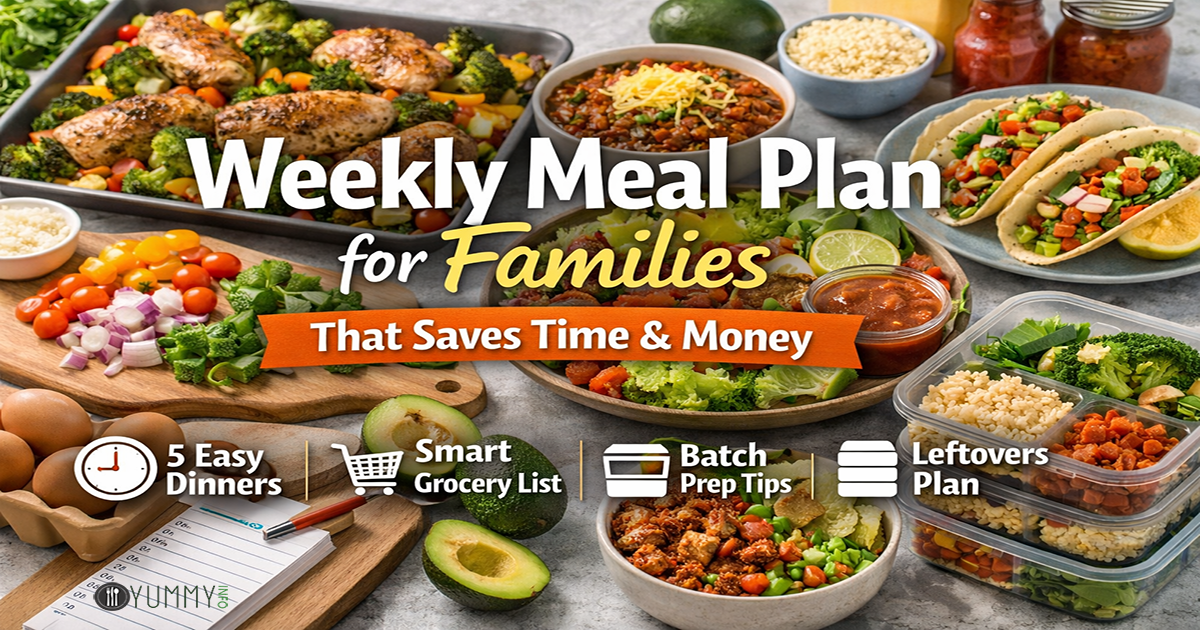
Weekly Meal Plan for Families That Saves Time and Money
If your week feels like a nonstop loop of “What’s for dinner?” — this plan is your reset button. You’ll get a simple 5-dinner rotation, a smart batch-prep checklist, and a grocery list built for fewer trips and less waste.
Quick Start: the 3-rule system
- Cook once, eat twice: build in 2 “planned leftover” nights.
- Repeat ingredients on purpose: the same proteins + veggies become different meals.
- One list, one trip: shop with a list to avoid impulse buys and extra store runs.
The Weekly Meal Plan (5 dinners + 2 flexible nights)
This plan assumes a typical busy week. You’ll cook five dinners, then use leftovers and a “flex night” to stay realistic. Swap days based on your schedule.
| Day | Dinner | Time Saver |
|---|---|---|
| Mon | Sheet-Pan Chicken + Veggies Serve with rice or potatoes. |
One pan, minimal cleanup. |
| Tue | Taco Night (ground turkey/beef OR beans) + toppings | Prep toppings once for multiple meals. |
| Wed | Pasta + Big Salad Add frozen veggies or leftover chicken. |
Fast pantry meal. |
| Thu | Leftover Remix Night Taco bowls, quesadillas, or salad wraps. |
No new cooking—just assemble. |
| Fri | Stir-Fry (chicken or tofu) + frozen mixed veggies | Use frozen veggies to cut prep. |
| Sat | Slow Cooker Chili / Soup (double batch) | Cook while you live your life. |
| Sun | Flex Night Breakfast-for-dinner, sandwiches, or freezer meal |
Built-in “life happens” buffer. |
Batch Prep (60–90 minutes that buys back your week)
Do this once (ideally Sunday). The goal is not perfection—just fewer midweek tasks.
Prep Checklist
- Chop “base” veggies: onion, bell pepper, carrots (store airtight).
- Wash greens: salad mix/spinach; store with a paper towel to keep crisp.
- Cook one grain: rice or quinoa (for bowls, stir-fry, sides).
- Mix 2 sauces: taco seasoning mix + simple stir-fry sauce (soy/ginger/garlic + honey).
- Pre-cook one protein (optional): bake chicken breasts or brown ground meat.
- Set up “leftover containers”: label Thu as “Remix Night” so leftovers don’t get ignored.
Family Grocery List (by aisle)
This list supports the full week plan above. Adjust quantities for your household size, and check your pantry first. Planning menus + making a list is a core budget tip recommended by nutrition organizations. :contentReference[oaicite:4]{index=4}
Produce
- Onions (2–3)
- Bell peppers (3)
- Carrots (1 bag)
- Broccoli (2 crowns) or florets
- Salad greens (1–2 large containers)
- Cherry tomatoes
- Avocados (optional for taco night)
- Limes / lemons
- Garlic + ginger
Protein
- Chicken breasts or thighs (3–4 lbs)
- Ground turkey or beef (1–2 lbs) or black beans (3–4 cans)
- Eggs (for flex night)
- Tofu (optional for stir-fry)
Pantry
- Rice or quinoa
- Pasta + marinara
- Taco shells/tortillas
- Canned tomatoes + beans (for chili)
- Chicken broth (or bouillon)
- Olive oil
- Soy sauce
- Spices: chili powder, cumin, paprika, oregano, garlic powder
Frozen
- Mixed vegetables (2 bags)
- Frozen corn (optional for tacos/chili)
Dairy (optional)
- Shredded cheese
- Sour cream or Greek yogurt
Extras / Lunchbox add-ons
- Fruit (bananas, apples, or whatever’s on sale)
- Whole-grain bread or wraps
- Hummus / peanut butter
Time & Money-Saving Rules Families Actually Stick To
1) Plan around what you already have
Before you shop, scan your fridge/pantry and “build meals backward” from what needs to be used first.
2) Repeat ingredients, not meals
The same chopped peppers/onions can be used in tacos, pasta, chili, and stir-fry—less waste, fewer unique items to buy.
3) Use unit prices + store brands
Comparing unit prices and using store brands are simple, proven ways to keep the total down. :contentReference[oaicite:5]{index=5}
4) Make leftovers a scheduled event
When leftovers are “the plan,” you’re less likely to abandon them. (And that matters: USDA highlights the real dollar loss from food that doesn’t get eaten.) :contentReference[oaicite:6]{index=6}
5) Use a realistic budget benchmark
If you want a quick reality-check, use the USDA Food Plans as a guidepost and adjust for your household. :contentReference[oaicite:7]{index=7}
Helpful Resources (for deeper budgeting + planning)
- USDA Cost of Food at Home (Monthly Reports) (dofollow)
- Nutrition.gov: Food Shopping & Meal Planning (dofollow)
- EatRight.org: 10 Tips for Eating Right Affordably (dofollow)
- USDA: Food Loss and Waste (nofollow)
FAQ: Weekly meal planning for families
How do I meal plan for a family without wasting food?
Start by planning 4–5 dinners (not 7), schedule one leftovers night, and keep one “flex night.” Check your fridge/pantry first, then shop with one list. Reducing waste matters because uneaten food can add up fast for families. :contentReference[oaicite:8]{index=8}
What’s the fastest way to meal prep for a family?
Prep the “building blocks”: chopped veggies, washed greens, one cooked grain, and one sauce. That’s enough to make weeknight cooking mostly assembly.
How much should a family of four budget for groceries?
It varies by region and preferences, but a solid benchmark is the USDA monthly “Cost of Food at Home” reports and USDA Food Plans. Use those numbers as a starting point and adjust for your household and cooking style. :contentReference[oaicite:9]{index=9}
What if my kids are picky eaters?
Use “mix-and-match” meals: tacos, pasta, bowls, and stir-fry let everyone choose toppings. Keep one safe side (fruit, rice, bread, or yogurt) so dinner stays calm.